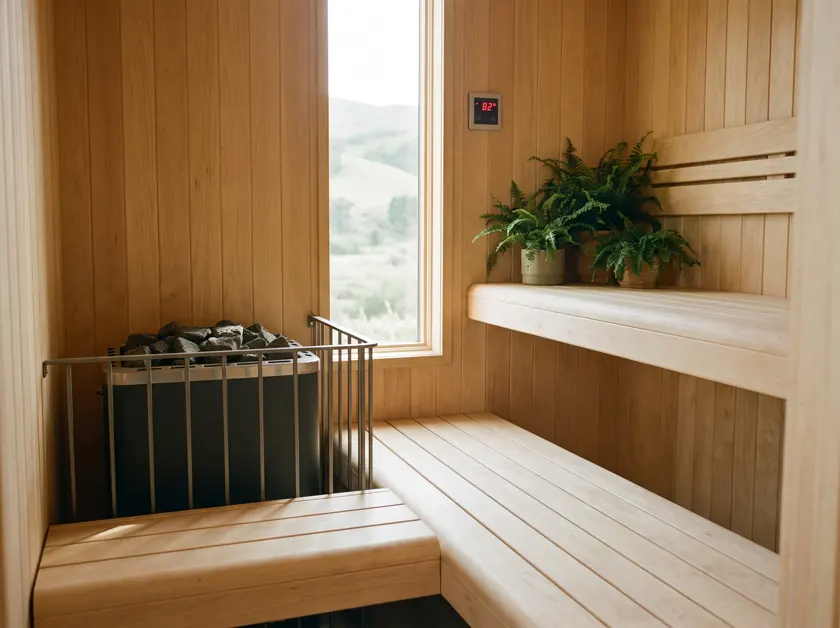
Custom saunas
A sauna that fits a Kigali hillside is not a box you order from a catalogue. The slope decides the foundation,…
Read more →Rwanda is the easiest cold-water market in Africa, and almost nobody says so. At 1,450 m the night air drops to 16-17 °C, so a chiller here does far less work than the same unit would at the coast.
Indicative band: 3.4–9.8 million RWF, supplied and installed.
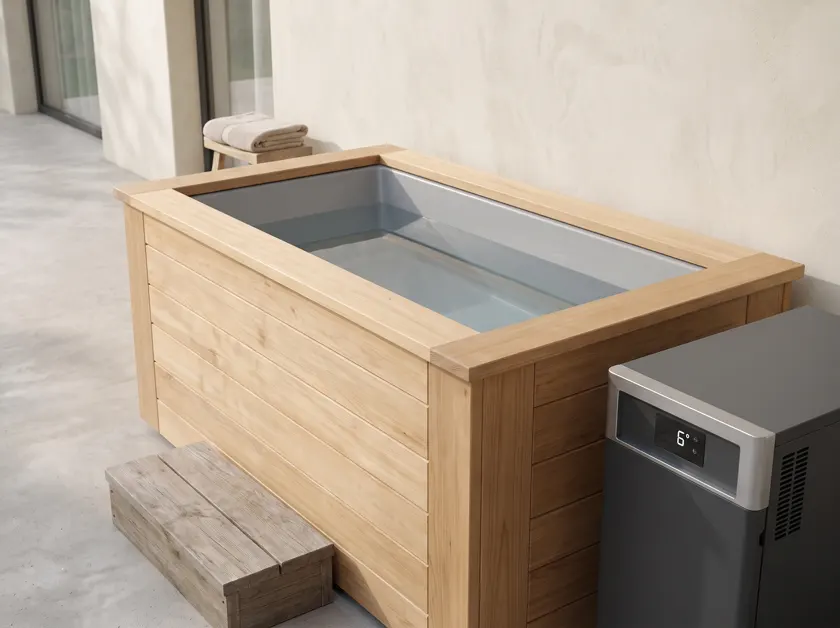
A chiller fights the difference between your target water temperature and the surrounding air. In Kigali that gap is small for most of the day and almost closes at night, so the compressor cycles less, the unit lasts longer and the monthly bill is lower than the same installation at the coast.
It still only works with insulation. An uninsulated tub in the sun will beat any chiller you put on it. We build the tub as an insulated shell — closed-cell insulation in the wall cavity, an insulated lid that actually gets used — and then size the chiller. In that order.
We work off volume and target temperature. As a rule of thumb: 1 HP for tubs up to about 260 litres, 2 HP to about 570 litres, 4 HP to about 1,200 litres, with a step up if the tub sits in full sun, is used back to back by a team, or is being held at 4 °C rather than 8-10 °C.
Filtration and sanitation matter more than people expect. Cold water does not hide anything, and a tub used by a gym needs a cartridge filter, circulation and an ozone or UV stage — otherwise it is a shared bath.
A timber-clad tub is the cheapest way to a good one and it moves if you move. A basalt or terrazzo basin built into a terrace is permanent, beautiful and needs the structure checked. A sunken pool for six to eight, with a bench and a ladder, is the commercial answer for a hotel or a club — and it needs a plant room, not a chiller sitting in the corner.
We build to hold 4-10 °C. Most people settle at 8-10 °C once the novelty passes; athletes and clubs usually want 4-6 °C, which costs more in chiller and in electricity.
For a plunge at 15-18 °C on a shaded terrace, often not — the mains water and the night air will do most of it. For anything reliably below 12 °C, yes.
With filtration, circulation and ozone, every four to eight weeks depending on use. Without them, weekly, and it will still not be pleasant.
A sauna that fits a Kigali hillside is not a box you order from a catalogue. The slope decides the foundation,…
Read more →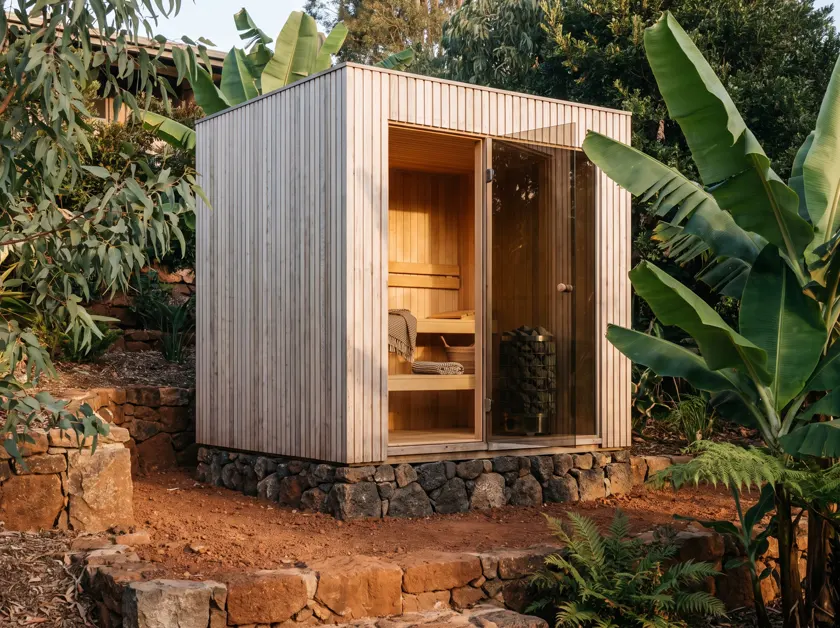
Almost every plot we work on in Kigali is terraced. That single fact decides most of the engineering: a garden…
Read more →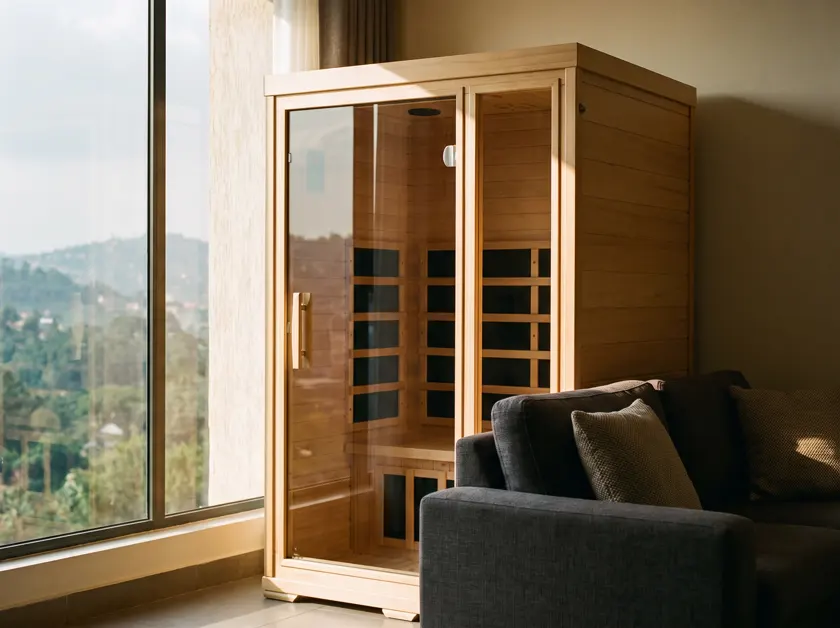
An infrared cabin is the answer when there is no three-phase supply, no drain and no room for a hot room — whi…
Read more →