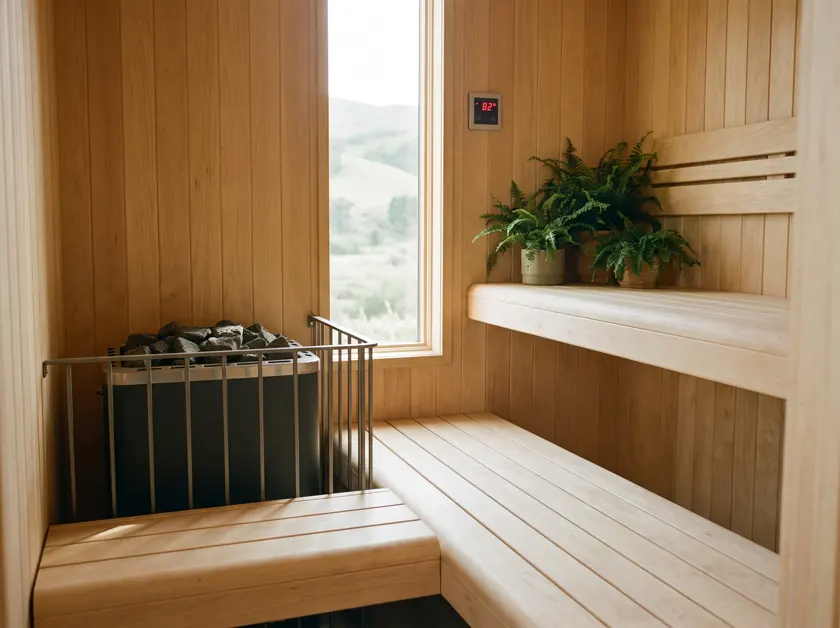
Custom saunas
A sauna that fits a Kigali hillside is not a box you order from a catalogue. The slope decides the foundation,…
Read more →Nyungwe is the wettest place we build in. Rainforest humidity does not let anything dry on its own, so ventilation stops being a detail and becomes the main design decision.
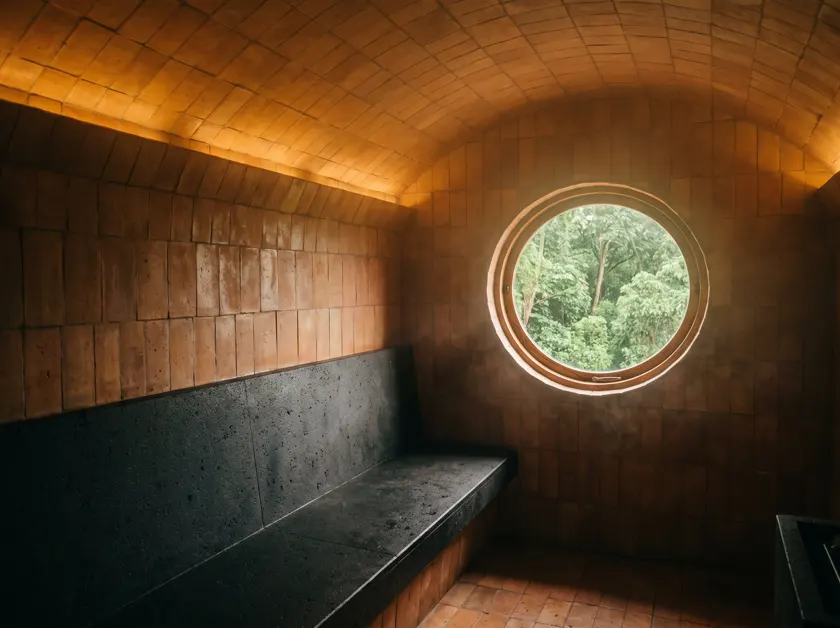
In a forest lodge, a cabin closed up after use will still be damp the next morning. We fit mechanical extract with a long run-on timer on every hot room, raise cabins clear of the ground on a ventilated void, and use charred or thermo-treated timber throughout — untreated softwood here has a short, unhappy life.
Vapour barriers must be continuous and correctly placed, warm side, with sealed penetrations. A barrier with gaps in this climate traps moisture inside the wall, which is worse than none.
Access, waste and noise are all constrained near the park. We prefabricate as much as possible in Gisozi so that on-site work is assembly rather than cutting, take our offcuts away, and run generators only in agreed windows.
Warm and dry, quickly. A steam room is a harder sell in a rainforest than a dry sauna — people have been damp all day. A hot dry cabin and a hot shower is the combination that gets used.
Yes, built for it: ventilated void beneath, continuous vapour barrier, thermo-treated or charred timber, mechanical extract with a run-on timer.
Dry sauna, almost always. Guests arrive damp and want to be dry and warm.
A sauna that fits a Kigali hillside is not a box you order from a catalogue. The slope decides the foundation,…
Read more →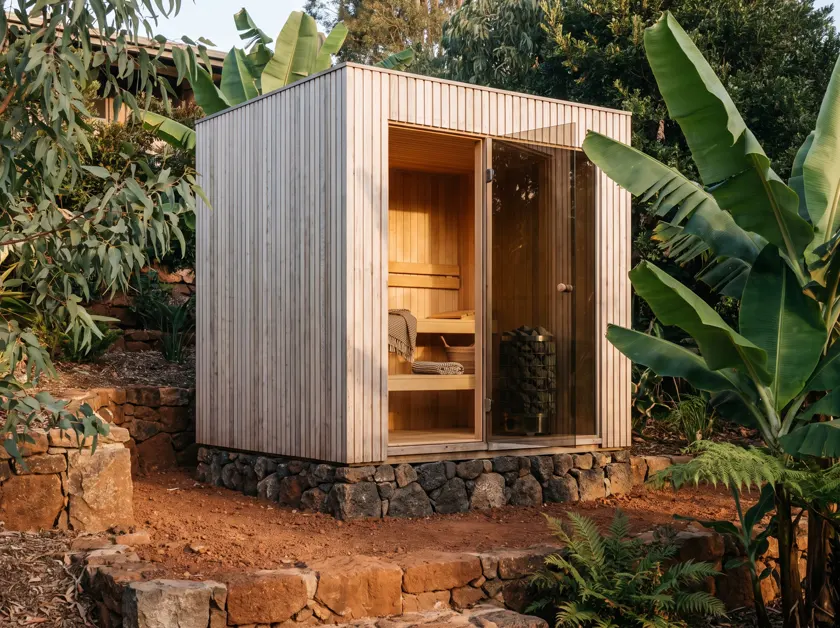
Almost every plot we work on in Kigali is terraced. That single fact decides most of the engineering: a garden…
Read more →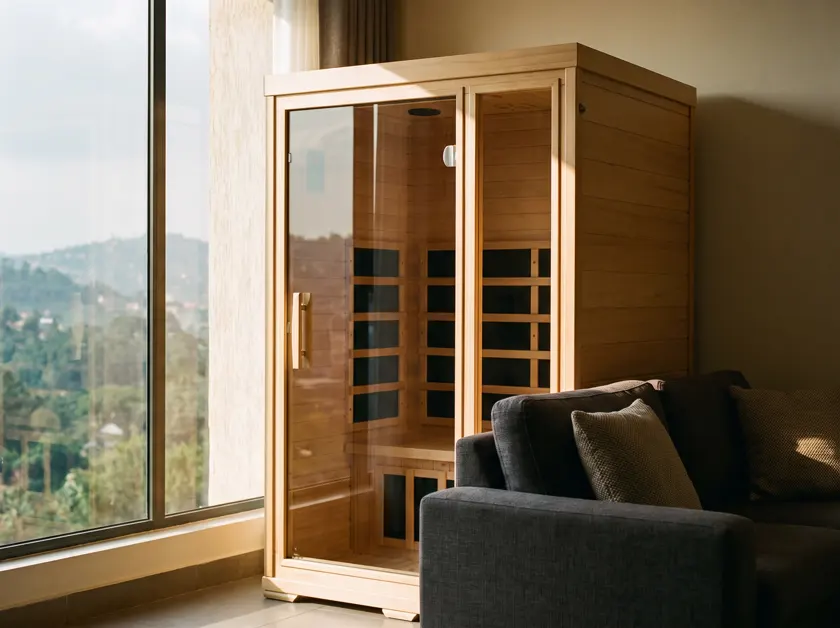
An infrared cabin is the answer when there is no three-phase supply, no drain and no room for a hot room — whi…
Read more →