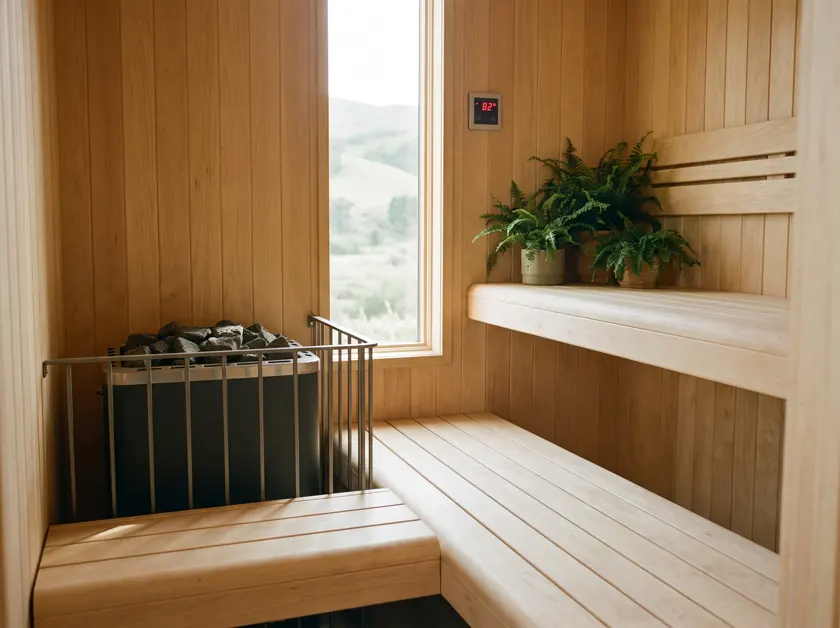
Custom saunas
A sauna that fits a Kigali hillside is not a box you order from a catalogue. The slope decides the foundation,…
Read more →The difference between a hammam and a steam room is where the heat lives. In a steam room it is in the air; in a hammam it is in the stone you are lying on.
Indicative band: 7.5–26 million RWF, supplied and installed.
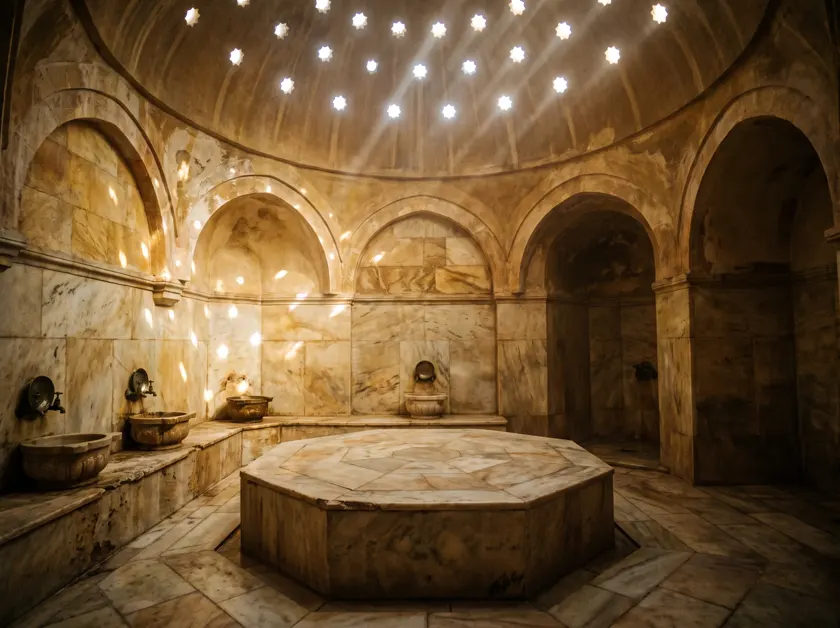
The navel stone is a raised marble slab heated from below by a water loop or electric mat set in the screed. It runs at 40-45 °C on the surface — warm enough to relax muscle through your back over twenty minutes, not hot enough to burn. Getting that even is the craft: the loop spacing tightens at the edges because the perimeter loses heat to the room.
Around it the room is warm and humid rather than hot: 40-50 °C air, high humidity, no scalding. That is why a hammam suits a Rwandan hotel spa where guests may sit for an hour, and why families use it where they would not use a 90 °C sauna.
Tadelakt — lime plaster polished with olive-oil soap — is the traditional wall finish and it is genuinely waterproof when it is done properly, which means by hand, in several passes, by someone who has done it before. It gives the soft ochre glow you cannot get from tile.
Marble is the other route: cooler to the eye, heavier on the structure, and easier to maintain. For the floor we use honed rather than polished stone, because polished marble plus water plus bare feet is how people fall over.
A pierced dome throws the traditional points of daylight across the steam. On a Kigali villa we usually build it as a shallow dome with fibre-optic lights instead of roof penetrations — the two rainy seasons are unforgiving to holes in a roof, however beautiful they are in Istanbul.
Fittings are brass because it patinates instead of pitting. Chrome in a hammam looks tired in three years.
No — much cooler. 40-50 °C and humid, against 80-90 °C and dry. What makes it intense is the time: people stay far longer, and the heated stone works on you the whole while.
Yes, if the floor can take the load. A göbek taşı plus screed plus stone adds serious weight, so on an upper floor we get the slab checked before we price anything.
Re-soaping once or twice a year keeps it sealed, which is a half-day job. Done badly in the first place, it needs redoing — which is why we do not subcontract it to whoever is cheapest.
A sauna that fits a Kigali hillside is not a box you order from a catalogue. The slope decides the foundation,…
Read more →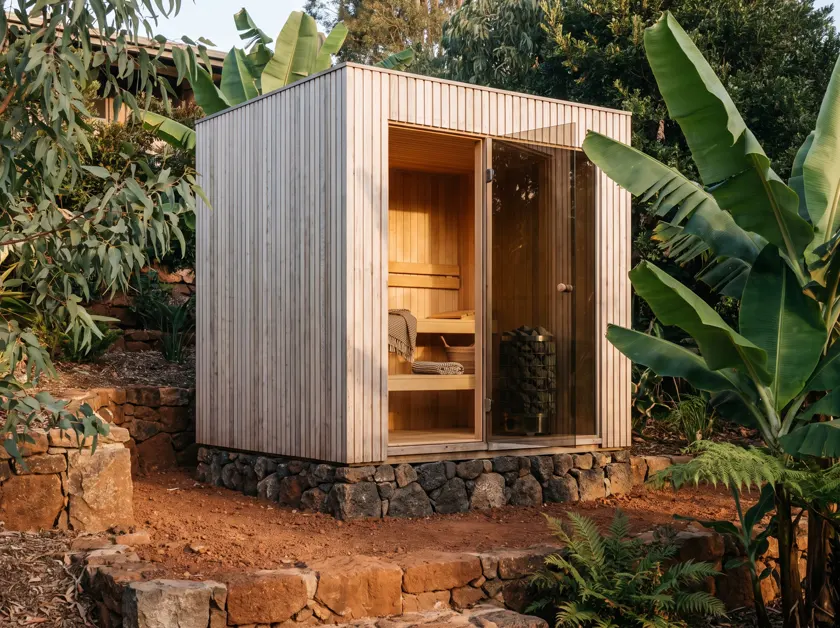
Almost every plot we work on in Kigali is terraced. That single fact decides most of the engineering: a garden…
Read more →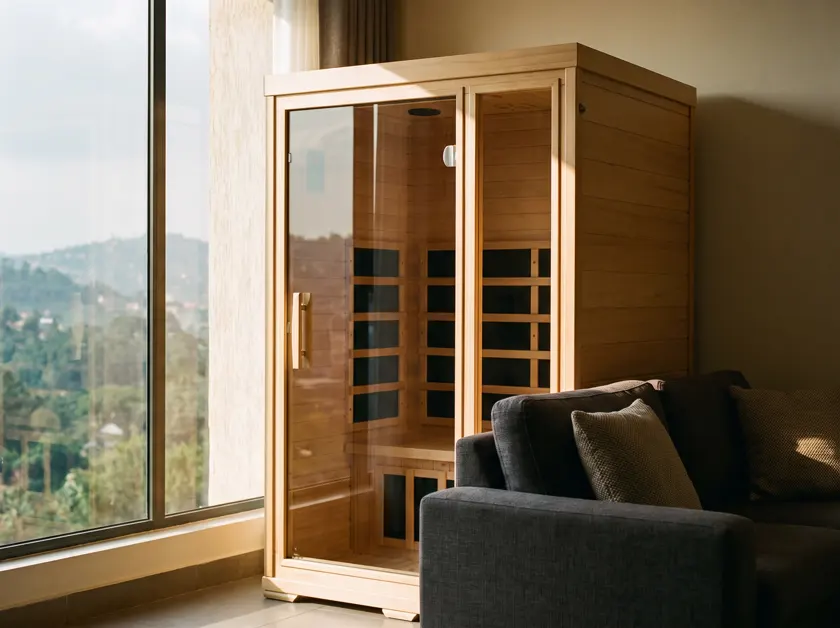
An infrared cabin is the answer when there is no three-phase supply, no drain and no room for a hot room — whi…
Read more →