
8 min
What a Sauna and Cold Plunge Cost in Rwanda in 2026
What a sauna and cold plunge cost in Rwanda in 2026: cabin, heater, chiller, duty, VAT and install in RWF, plu…
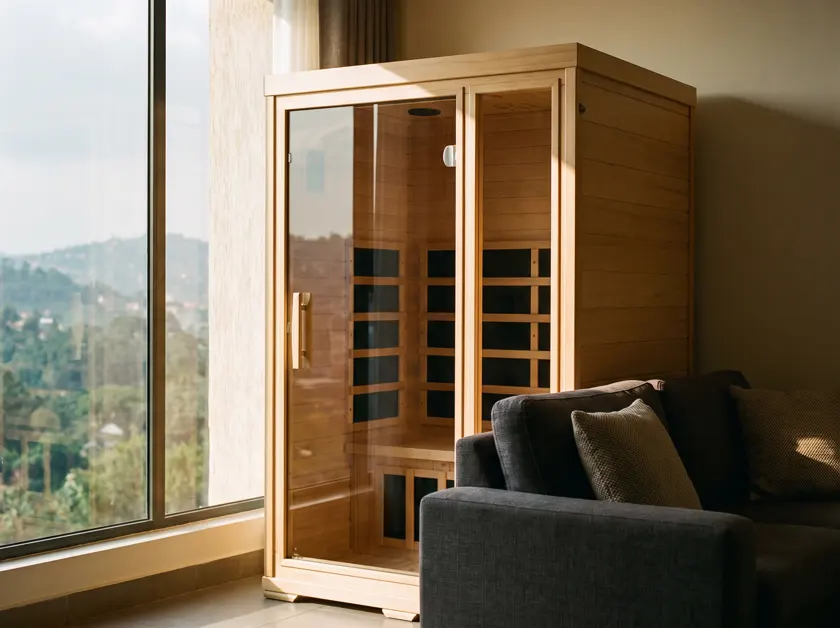
Read more →For a Kigali apartment or a small villa, the choice between an infrared cabin and a Finnish sauna is usually made by three things you already know: your electricity supply, whether you own or rent, and what kind of heat you actually enjoy.
| Your home | Our usual recommendation | Why |
|---|---|---|
| Rented apartment, single-phase | Infrared cabin | Own 230 V circuit, no drain, leaves with you |
| Owned apartment, three-phase available | Compact Finnish sauna | Real heat and löyly in about 1.2 × 1.5 m |
| Small villa, garden, single-phase | Finnish cabin up to about 8 kW, or infrared | Depends on the supply and who will use it |
| Villa with three-phase and space | Finnish sauna with a plunge | The full hot-and-cold sequence |
The rest of this article explains the reasoning, so you can decide for yourself rather than take the table on trust.
A Finnish sauna heats the air and a mass of stones, typically to 70–90 °C, and you raise the humidity in bursts by throwing water on the stones — the löyly. The heat arrives all around you at once, and it is intense for ten to fifteen minutes at a time.
An infrared cabin warms your body directly with radiant panels while the air stays at roughly 45–60 °C. There is no water, no steam and no burst of heat; you sweat steadily over thirty to forty minutes. People who find a hot sauna oppressive often prefer it. People who grew up with saunas usually miss the löyly within a week. If you can, sit in both before you choose.
This usually decides it in a Kigali apartment. An infrared cabin draws 1.5–2.5 kW and runs on a 230 V circuit of its own. A two-person Finnish cabin needs about 4.5 kW at Kigali's altitude — still possible on single phase with a dedicated circuit — while a four-person cabin needs 10.5–12 kW, which calls for REG's 400 V three-phase supply.
If your building offers only single phase and you rent, the choice is effectively made. If you own, a three-phase meter costs the same RWF 56,000 as a single-phase one (REG New Connection Policy), and the real cost is in the cabling.
A two-person infrared cabin needs a flat floor with a footprint of a little over a square metre and about 10 cm behind it for the cable; it needs no vent to the outside. A two-person Finnish cabin needs about 1.2 × 1.5 m, an air inlet low near the heater and an outlet high on the opposite side, and a room where a little warm air leaving the cabin does no harm.
Neither is heavy enough to worry a normal floor — a water-filled plunge is what brings the structural engineer in. Neither needs a drain, although a Finnish cabin is far better with a cold shower close by. On a covered balcony, either one needs a sheltered supply point and a roof that keeps the March–April and October–November rains off it; fully open to the weather, neither is a good idea.
An infrared cabin is comfortable about fifteen minutes after switching on, which suits a quick session before work or after a late meeting. A Finnish cabin takes twenty to forty minutes to reach temperature, depending on its insulation, so it rewards a routine: start it from the controller's timer on the way home and it is ready when you walk in.
If early mornings are the only free time in your week, that difference alone may decide it.
Children, older relatives and guests often find infrared easier to enjoy: the air is cooler, there is no sudden wave of steam, and sessions can be short. The keen sauna users in a family will want the Finnish cabin, ideally with a cold shower or a plunge beside it. Where a household is split, a four-person Finnish cabin run at a gentler 70 °C is a reasonable compromise, and far cheaper than building both.
Both kinds of cabin we supply bolt together from panels and can be taken apart. The infrared cabin is the easier move: no stones, no three-phase connection to disconnect, and a landlord who never had to agree to a change of supply. For diplomatic and NGO households on two- or three-year postings, that often settles it; our Kimihurura page covers the typical apartment constraints in one of the city's densest districts.
At REG's household top-block rate of RWF 369 per kWh (from 1 October 2025, before VAT and the regulatory fee), a 45-minute infrared session at 2 kW costs about RWF 550. A two-person Finnish cabin with a 4.5 kW heater — about 35 minutes to warm up, then an hour in use — draws roughly 4.4 kWh, some RWF 1,600. A four-person cabin with one glass wall comes to about RWF 4,350 an evening.
The difference is real but small next to the purchase price. What matters more is whether you will use the room four evenings a week or four evenings a year.
| Option | Indicative, million RWF |
|---|---|
| Infrared cabin, 2 person | 1.4 – 2.2 |
| Infrared cabin, 3–4 person, full spectrum | 2.3 – 3.6 |
| Finnish sauna, 2 person, solid walls | 3.2 – 4.4 |
| Finnish sauna, 4 person, one glass wall | 4.6 – 6.8 |
All bands are supplied and installed with EAC duty and 18% VAT inside. The Finnish options exclude the cable from your board, which is modest in an apartment that already has three-phase and may mean an upgrade in a single-phase villa.
An infrared cabin needs little beyond wiping the benches and an occasional check of the panels and wiring. A Finnish sauna needs its stones re-stacked or replaced every couple of years, an annual service of the heater and controls, and oil on the timber where hands and backs touch it. Both last many years when they are looked after, and both carry our 24-month warranty.
If you rent, have single phase and want something you will use several evenings a week, choose the infrared cabin and do not look back. If you own, can get three-phase and have ever enjoyed a real sauna, build the Finnish cabin, even a small one.
Each option is described in detail on our infrared sauna and custom sauna pages. Send a photo of the space with the room dimensions, and we will answer with an itemised quote for both.
Want these numbers worked out for your own room in Rwanda? Send the dimensions and a photograph — we answer within one business day with an itemised quote.
What a sauna and cold plunge cost in Rwanda in 2026: cabin, heater, chiller, duty, VAT and install in RWF, plu…
Read more →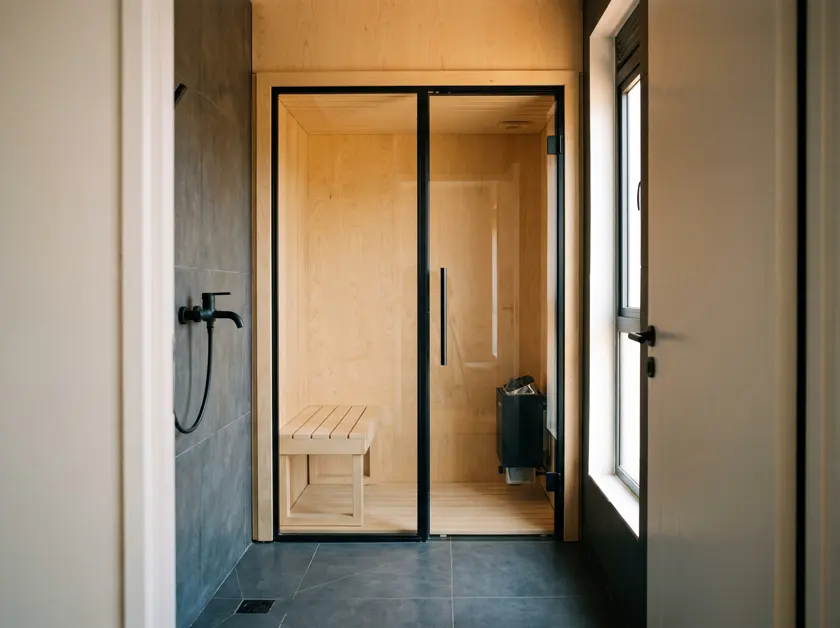
Sauna electricity in Rwanda: the REG tariff from October 2025, when you need three-phase, and what a session c…
Read more →
Adding a sauna, steam room or plunge to a Rwandan hotel or lodge: grading, building permits, park rules, power…
Read more →